

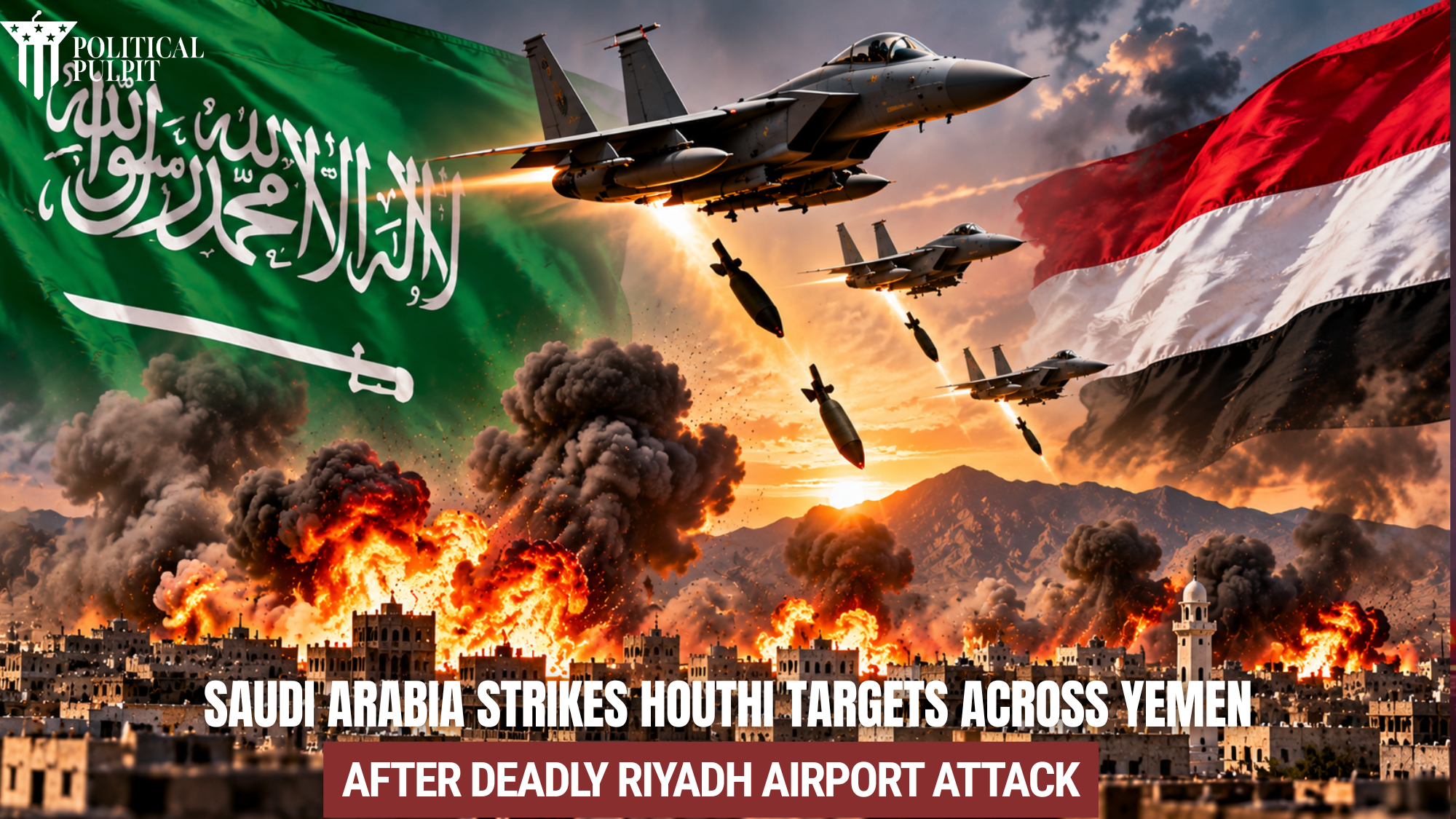
RIYADH, SAUDI ARABIA — Saudi Arabia’s military coalition has launched new strikes against Houthi targets in Yemen following a deadly attack on Riyadh’s main international airport.
On October 13, the Saudi-led coalition announced operations targeting fuel facilities and infrastructure in Sanaa, Hodeidah, and Dhamar.
Saudi officials accused the Iran-backed Houthi movement of using these locations to support missile and drone attacks against the kingdom.
The operation marks another escalation in a conflict that has disrupted civilian aviation and raised concerns about regional security.
Saudi Coalition Targets Fuel Infrastructure
Coalition spokesman Major General Turki al-Maliki said Saudi-led forces targeted facilities allegedly supporting Houthi military operations.
The identified locations included the Al-Sabaha Central Station in Sanaa, underground fuel reserves, storage tanks, and fuel transportation infrastructure.
According to Saudi officials, the Houthis have used civilian facilities to sustain attacks against Saudi Arabia and international shipping.
However, independent investigators have not publicly verified every allegation concerning the facilities’ military use.
The full extent of the damage also remains unclear.
Although Saudi authorities confirmed military operations, reports claiming that entire Houthi bases were destroyed go beyond the available evidence.
Deadly Attack on Riyadh Airport
The latest Saudi operations followed repeated Houthi missile and drone attacks against the kingdom.
On October 10, an attack struck King Khalid International Airport in Riyadh.
Saudi aviation authorities initially reported 12 deaths and 309 injuries. Subsequent reporting indicated that the death toll had increased.
Victims included Saudi citizens and foreign nationals, including an American.
The attack forced authorities to suspend airport operations and divert flights.
Saudi officials blamed the Houthis, who also claimed responsibility for attacks against Saudi targets during the escalation.
On October 12, Saudi air defenses intercepted another missile launched toward Riyadh.
The repeated attacks have intensified concerns about the safety of civilians and critical transportation infrastructure.
Regional Security Concerns Continue Growing
Here at Political Pulpit, we are closely monitoring this confrontation because its consequences extend beyond Yemen and Saudi Arabia.
The kingdom plays a major role in global energy markets.
Continued fighting could threaten transportation networks, commercial shipping, and regional economic stability.
Meanwhile, the conflict has placed additional pressure on international diplomatic efforts.
President Donald Trump has said the United States is considering its response to Houthi attacks, although Washington has not announced direct participation in the latest Saudi operation.
A Biblical Perspective
Matthew 24:6 KJV declares:
“And ye shall hear of wars and rumours of wars: see that ye be not troubled: for all these things must come to pass, but the end is not yet.”
Scripture reminds us to remain spiritually grounded during periods of warfare and uncertainty.
Christians should seek truth, pray for peace, and remember those suffering through conflict.
Where We Stand
At Political Pulpit, we believe attacks that kill or injure innocent civilians deserve serious attention.
We recognize the importance of protecting civilian populations and investigating threats against airports and other essential infrastructure.
At the same time, military operations require careful reporting, especially when officials make claims about targets and battlefield results.
We will continue following verified developments while praying for families affected by violence throughout the Middle East.
Subscribe to the Political Pulpit newsletter for more faith centered reporting and analysis.
Watch our broadcasts at Watch.OSN.tv and use promo code JOSH.
Support our mission at www.politicalpulpit.com/partner.
The time to speak is now, the time to act is now. The time to pray for peace, protection, and stability in the Middle East is now.