
Iran’s currency plunged to a new record low Tuesday, deepening an economic crisis that has already pushed prices sharply higher and placed enormous pressure on Iranian families.
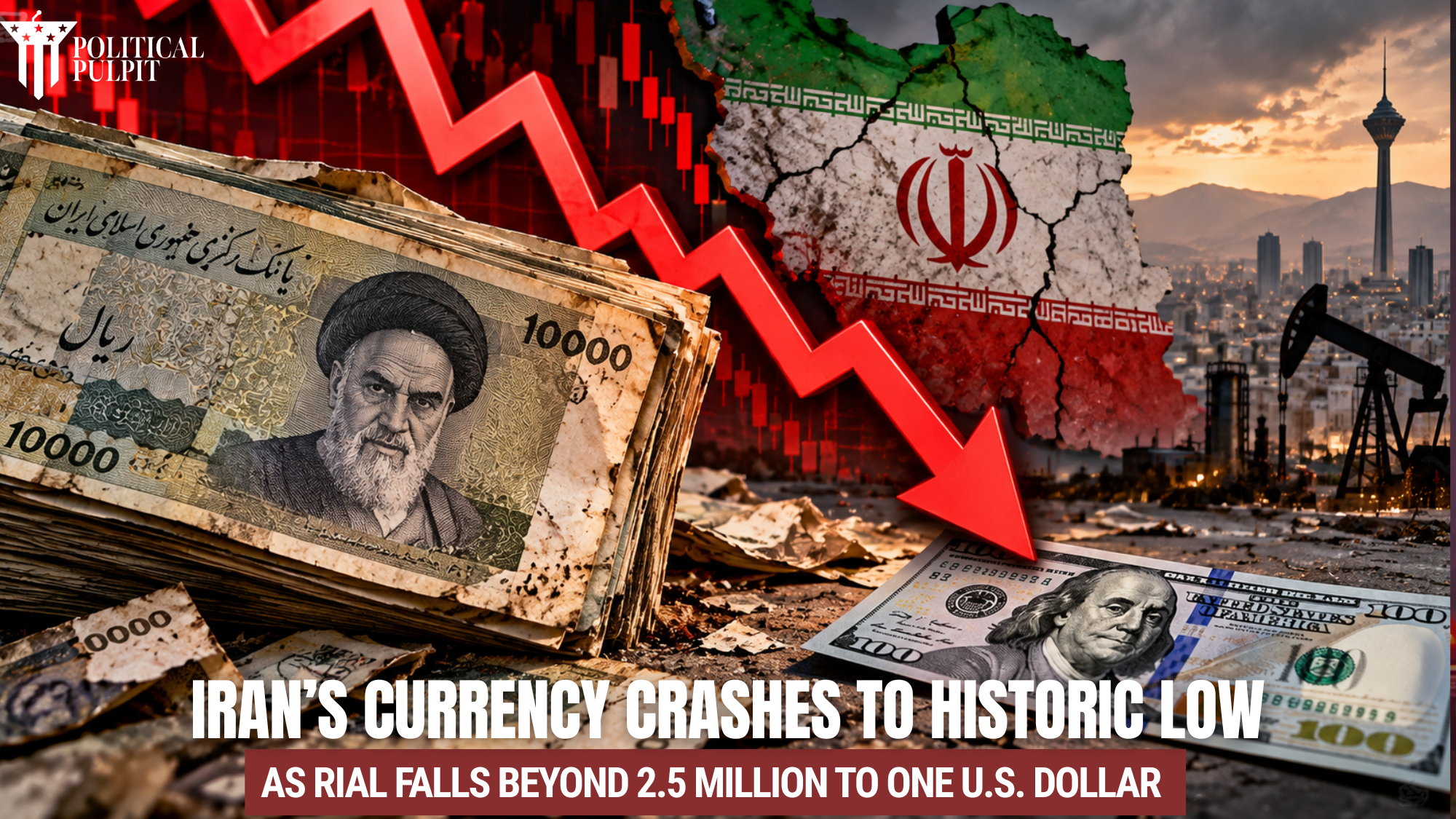
The Iranian rial fell beyond 2.5 million to one U.S. dollar on Tehran’s open market, according to multiple reports tracking currency trading inside Iran.
The Associated Press reported traders were exchanging more than 2.5 million rials for one dollar. Anadolu Agency reported the dollar briefly reached approximately 2.548 million rials in free market trading.
The decline marks another historic low for a currency that has repeatedly lost value during 2026.
Only 27 days earlier, the rial reached what was then a record low of approximately 2.2 million to the dollar on the open market.
That record has now been broken.
Inflation Puts Pressure on Iranian Families
The currency collapse carries consequences far beyond financial markets.
A weaker rial makes many imported products and raw materials more expensive, increasing pressure on businesses and consumers already struggling with severe inflation.
Official Iranian data cited by Anadolu Agency put annual inflation at 61.4 percent, while food prices had increased 128.1 percent compared with a year earlier.
For ordinary Iranians, those numbers can translate into rapidly rising costs for food and other necessities.
Iran operates multiple exchange rates, so the rate above represents open market trading rather than every government transaction. Still, the open market rate remains an important measure of the currency’s value outside official channels.
War and Sanctions Intensify Economic Pressure
Iran’s economic problems predate the current conflict.
Years of international sanctions, domestic economic policies and restrictions on Iran’s participation in the global financial system have weighed heavily on the economy.
The ongoing Middle East war has added further pressure.
The U.S. naval blockade on Iranian oil and additional sanctions imposed during the conflict have placed further strain on Tehran’s economy and currency.
Meanwhile, diplomatic efforts involving Iran and the United States continue as mediators attempt to find a path toward reopening the Strait of Hormuz and reducing regional tensions.
Whether those negotiations produce an agreement remains uncertain.
A Biblical Perspective
Scripture repeatedly reminds leaders of the responsibility to govern with justice.
“When the righteous are in authority, the people rejoice: but when the wicked beareth rule, the people mourn.” Proverbs 29:2 KJV
Economic statistics can appear abstract, but behind every number are families trying to buy food, provide for children and survive uncertain conditions.
Where We Stand
The Iranian rial’s collapse represents more than a currency story.
It demonstrates the tremendous economic pressure facing the Iranian people as war, sanctions, inflation and government policies converge.
Americans should distinguish between Iran’s government and Iranian civilians who must live with the economic consequences of decisions made by political and military leaders.
As tensions continue, we should pray for peace, wisdom and protection for innocent people throughout the region.
Subscribe to the Political Pulpit newsletter for more faith centered reporting and analysis.
Watch our broadcasts at Watch.OSN.tv and use promo code JOSH.
Support our mission at www.politicalpulpit.com/partner.
The time to speak is now, the time to act is now. The time to pray for peace, wisdom and the people suffering across the Middle East is now.