

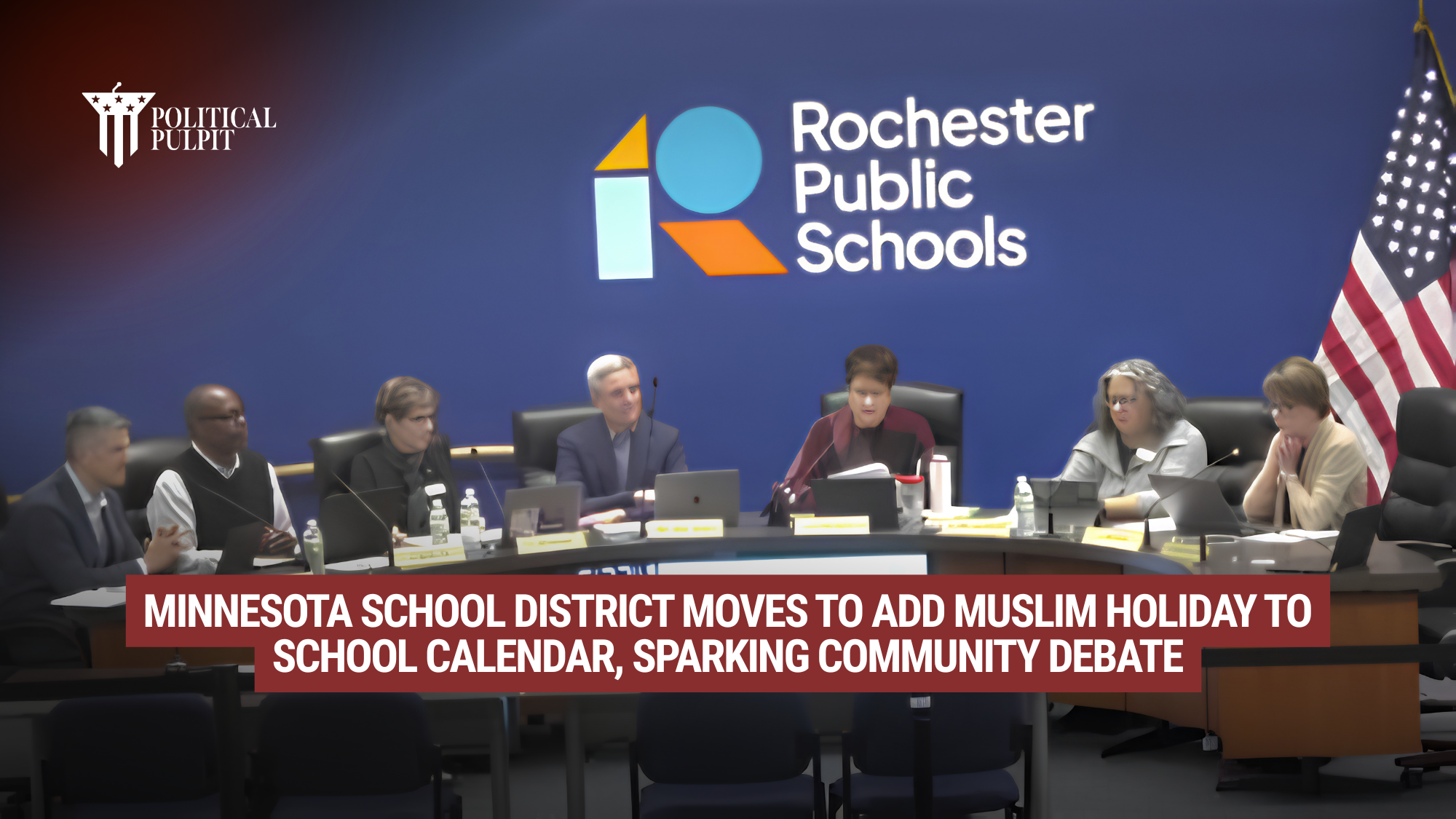
A Minnesota school district is at the center of a growing debate after officials proposed adding Eid al-Adha as an official district-wide day off beginning in the 2027-2028 school year.
Rochester Public Schools presented a draft calendar that would designate May 5, 2028, as a non-school day in recognition of Eid al-Adha, one of Islam’s most significant religious observances. District leaders cited consistent attendance declines during the holiday as one of the primary reasons for the proposed change. The school board is expected to vote on the calendar later this month.
The proposal has quickly generated discussion both locally and nationally, with supporters viewing it as a practical accommodation for a growing student population and critics questioning what the change means for the future of public education and American cultural traditions.
Why Officials Proposed the Change
Rochester Public Schools serves approximately 17,500 students and has experienced significant demographic changes over the past decade. School leaders say many Muslim families already keep their children home during Eid celebrations, resulting in noticeable attendance drops across the district.
Officials worked alongside principals, teachers, and community representatives while developing the proposed calendar. Supporters argue that recognizing the holiday would reduce disruptions to student learning and prevent students from having to choose between religious observance and classroom attendance.
Community advocate Yahye Ahmed praised the proposal, describing it as a meaningful step toward helping students remain engaged academically while honoring important religious obligations.
A Growing National Trend
Rochester is not the first school district to consider such a move.
Several major districts across the country already recognize Eid holidays on their academic calendars. New York City schools, for example, have observed major Muslim holidays for years, while other districts have adopted similar policies as student populations become more diverse.
Supporters argue that public schools have long accommodated various religious holidays and that recognizing Eid reflects the changing makeup of many American communities.
Critics, however, see the issue differently.
Many online commenters have expressed concern that schools are moving away from America’s historic Christian foundations while increasingly embracing accommodations for other faith traditions.
Others argue that public schools should remain focused on academics and avoid becoming involved in debates over religious recognition altogether.
A Larger Cultural Conversation
The controversy highlights a broader discussion occurring throughout the country.
As communities become more diverse, school districts continue wrestling with how to balance inclusion, tradition, and practical educational concerns.
For some families, recognizing religious holidays promotes fairness and respect.
For others, it raises questions about whether longstanding American customs are gradually being replaced.
The debate reflects deeper concerns about culture, identity, and the role public institutions should play in navigating religious differences.
A Biblical Perspective
For Christians, these conversations provide an opportunity to remember that faith is not sustained by government recognition but by faithful obedience to God.
Scripture reminds believers:
“Blessed is the nation whose God is the Lord” – Psalm 33:12
While public policy debates will continue, Christians are called to remain grounded in truth, conviction, and love.
The strength of the Church has never depended on calendars or government institutions. It has always depended on faithful believers living out the Gospel.
Where We Stand
The Rochester proposal has sparked an important conversation about faith, education, and the changing face of American communities. Regardless of where people stand on the issue, it highlights the ongoing challenge of balancing religious accommodation with cultural tradition.
Pray for wisdom for school leaders, parents, and elected officials as they make decisions that affect future generations. Pray for Christian families navigating a rapidly changing culture. Pray that truth, faith, and biblical values remain strong in America’s communities.
Subscribe to the Political Pulpit newsletter for more faith-centered reporting and analysis.
Watch our broadcasts at Watch.OSN.tv and use promo code JOSH.
Support our mission at politicalpulpit.com/partner.
The time to speak is now, the time to act is now. The time to pray for our schools, our families, and our nation is now.