

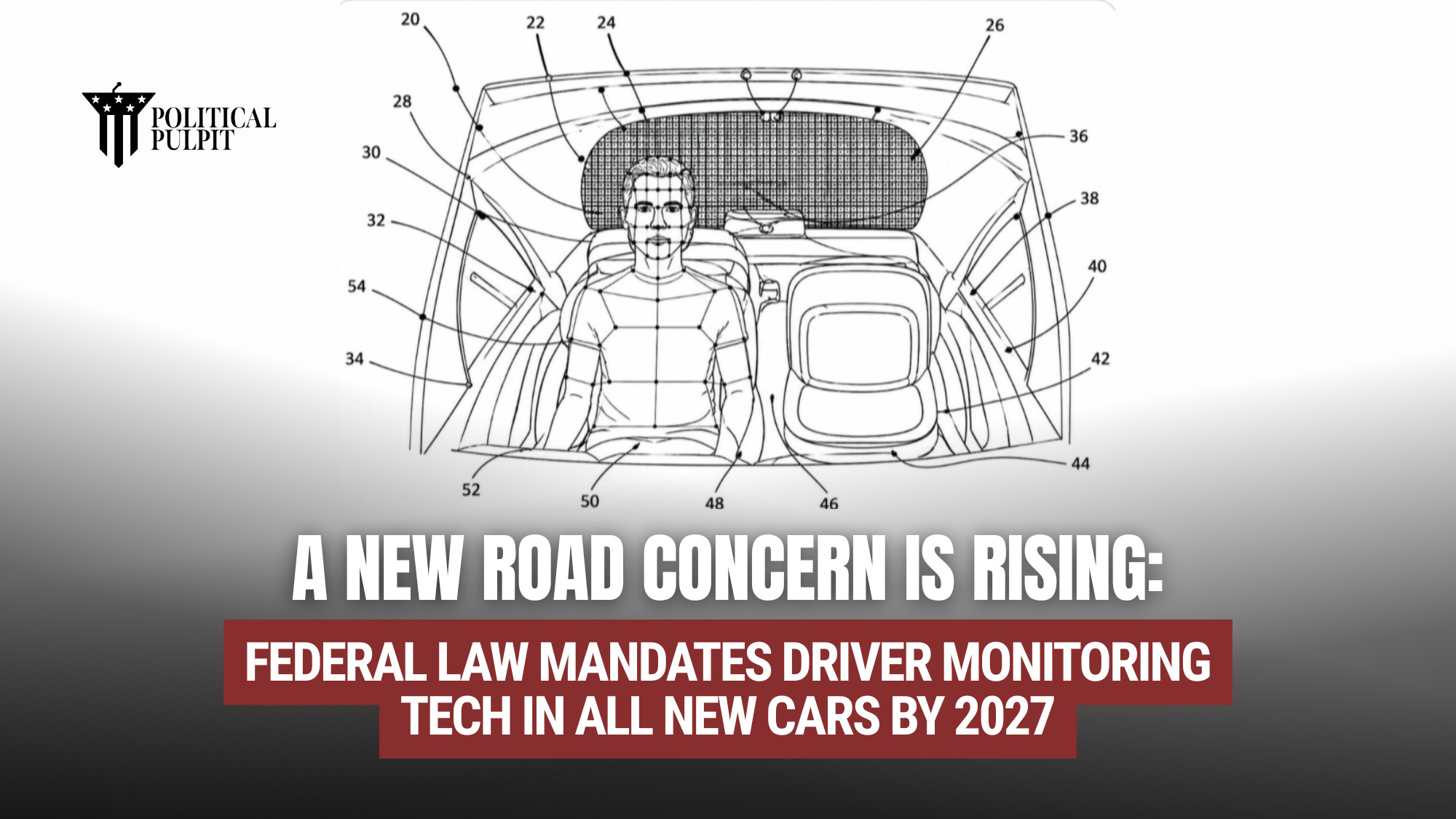
A major shift is coming to every driver in America, and most people are just now realizing it.
Under a federal mandate tied to the Infrastructure Investment and Jobs Act, all new vehicles sold in the United States will be required to include advanced driver monitoring systems beginning with model year 2027. The goal is to reduce impaired driving, but the implications are far broader.
This is not a proposal.
It is already law.
And it is moving forward.
What the Technology Does
The systems being developed are designed to detect signs of impairment using a range of monitoring tools. These include infrared cameras that track eye movement, sensors that measure attention and alertness, and software that analyzes head position and driving behavior in real time.
In practice, this means your car will actively watch how you drive.
If the system determines that you may be impaired, it can take action. Depending on how the technology is implemented, the vehicle could prevent you from starting the car, limit your speed, or intervene while driving.
Supporters argue this could save lives.
But critics are raising serious concerns.
A Line Between Safety and Surveillance
At its core, this law raises a deeper question. Where is the line between safety and control?
For decades, efforts to reduce drunk and impaired driving have focused on enforcement and education. This new approach shifts that responsibility into the vehicle itself, giving technology the authority to make decisions in real time.
That shift changes the relationship between driver and machine.
It introduces a level of surveillance that many Americans are not used to inside their own vehicles. And it opens the door to questions about how far this technology could go.
Scripture reminds us that wisdom matters when authority increases.
The prudent man foreseeth the evil, and hideth himself: but the simple pass on, and are punished
Proverbs 22:3
Discernment becomes critical when new systems begin to shape daily life.
The Real Debate
This is not just about cars.
It is about control, trust, and the role of technology in personal decision-making.
Who decides when you are fit to drive? A human being, or an algorithm? And what happens if that system makes the wrong call?
These are not hypothetical concerns. As artificial intelligence becomes more integrated into everyday life, the decisions it makes will carry real consequences.
For some, this represents progress.
For others, it represents a step too far.
A Nation at a Crossroads
As the 2027 deadline approaches, automakers are racing to meet federal requirements while balancing consumer trust and technological capability.
At the same time, Americans are beginning to ask harder questions about privacy, autonomy, and the growing role of AI in daily life.
This is not just a policy change. It is a cultural shift.
And it reflects a broader movement toward automation, oversight, and centralized control in areas that were once purely personal.
Where We Stand
Moments like this demand awareness. Technology can serve a purpose, but it must be approached with wisdom.
Not every innovation should be accepted without question and not every solution comes without consequence.
Pray for wisdom for leaders shaping policies that impact everyday life, pray for discernment in a time of rapid technological change. Pray that truth, freedom, and responsibility will remain at the center of decision-making in this nation.
Subscribe to the Political Pulpit newsletter for more faith-centered reporting, and join the fight for truth, freedom, and discernment in a rapidly changing world.
Watch our broadcasts at Watch.OSN.tv and use promo code JOSH.
Support our mission at www.politicalpulpit.com/partner.
The time to speak is now, the time to act is now. The time to pray for wisdom, discernment, and protection is now.