
A potential turning point has emerged in one of the most volatile conflicts in the world.
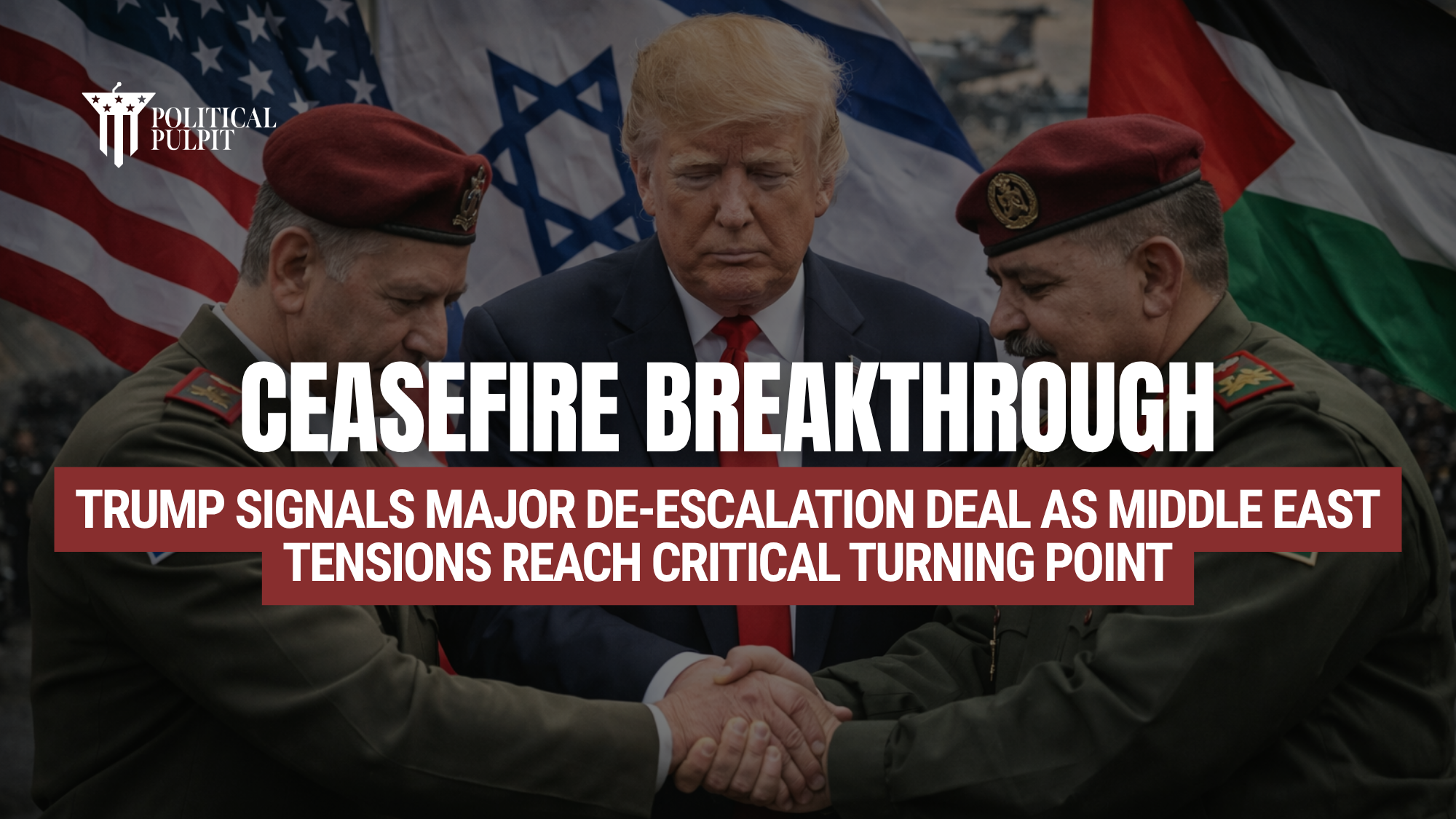
President Donald Trump has signaled progress toward a ceasefire agreement in the Middle East, raising cautious optimism that a temporary halt in hostilities could bring relief to a region gripped by war, uncertainty, and rising casualties.
While details remain limited, early reports indicate that negotiations are underway involving key regional players, with the goal of reducing violence and stabilizing the situation.
This moment matters. Because after weeks of escalation, the world is now watching for something different: De-escalation.
A Shift in Tone
For weeks, headlines have been dominated by missile strikes, military responses, and rising tensions involving Iran, Israel, and U.S. forces.
However, this latest development signals a shift.
President Trump’s push for a ceasefire suggests that strategic objectives may be giving way to diplomatic efforts, at least temporarily. At the same time, global leaders appear to be recognizing the growing risks of continued escalation. Because of this, discussions around a ceasefire have gained urgency.
What a Ceasefire Means
A ceasefire does not end a conflict but it changes the pace.
It can:
- Pause active military operations
- Allow humanitarian aid to reach affected areas
- Create space for further negotiations
In addition, it offers a critical opportunity to prevent further loss of life.
However, ceasefires also come with challenges. They require trust. They demand enforcement. And they can break quickly if conditions are not met.
Global Stakes Remain High
Even as ceasefire talks progress, the broader situation remains fragile.
The Middle East continues to sit at the center of global energy supply, political alliances, and security concerns. As a result, any agreement temporary or long-term will carry significant implications.
Meanwhile, nations around the world are watching closely, weighing their own roles in what comes next. Because if a ceasefire holds, it could stabilize the region. But if it fails The consequences could escalate quickly.
A Spiritual Perspective
For believers, moments like this carry deeper meaning.
Scripture tells us:
“Blessed are the peacemakers, for they shall be called sons of God.” — Matthew 5:9
Peace is not weakness. It is strength under control. And in a world filled with conflict, even a temporary pause can become an opportunity for something greater.
What the Church Must Do
In times of uncertainty, the church must remain both watchful and prayerful.
We are called to:
- Pray for peace in the Middle East
- Pray for wisdom for President Trump and global leaders
- Pray for protection over civilians and military personnel
- Pray that any ceasefire leads to lasting stability
At the same time, we must remain grounded in faith not driven by fear or speculation.
Final Word
The possibility of a ceasefire marks a critical moment. After weeks of conflict, the door to peace however temporary has opened.
The world now waits.
Will it hold?
Will it lead to something more?
Or will tensions rise again?
Only time will tell. But one truth remains steady: God is still in control.
Subscribe to the Political Pulpit newsletter for more faith-centered reporting, and join the fight for truth, justice, and global religious freedom.
Watch our broadcasts at Watch.OSN.tv – use promo code JOSH
Support our mission at www.politicalpulpit.com/partner
The time to speak is now.
The time to act is now.
The time to pray for peace, wisdom, and stability in a critical hour is now.