
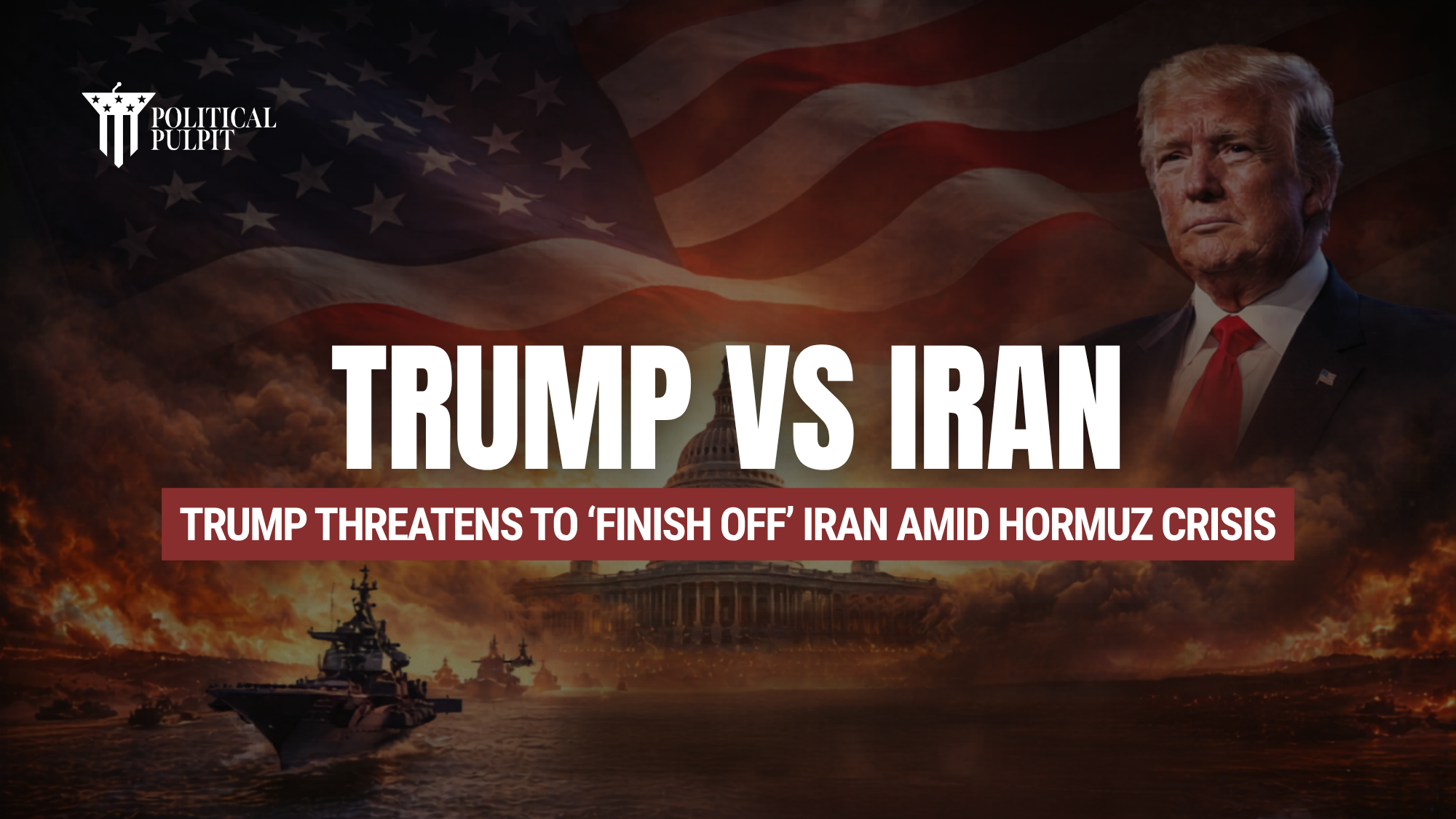
A major shift in U.S. foreign policy may be unfolding as President Donald Trump signals that the conflict with Iran could be nearing its final phase and with it, a dramatic change in how the world’s most critical chokepoint is secured.
In recent statements, Trump indicated that the United States is close to achieving its military objectives in Iran, while also making it clear that America will not continue to carry the burden of policing the Strait of Hormuz alone.
His message was direct: “No free rides.”
A War Potentially Nearing Its End
After months of escalating conflict, U.S. military operations have focused on dismantling Iran’s strategic capabilities targeting missile systems, infrastructure, and regional influence.
While no official declaration of victory has been made, Trump’s tone suggests confidence that key objectives are close to being met, and that discussions around scaling back U.S. involvement are already underway.
This signals a potential transition from active engagement to post-conflict stabilization.
But what happens next may be just as significant as the war itself.
The Strait of Hormuz: A Global Responsibility?
At the center of this shift is the Strait of Hormuz, one of the most vital energy corridors in the world.
Nearly 20% of global oil supply passes through this narrow passage, making it essential not just to the United States but to Europe, Asia, and beyond.
For decades, the U.S. Navy has played a leading role in securing these waters.
But now, Trump is signaling a different approach: Nations that depend on the Strait should take responsibility for protecting it.
This represents a major philosophical shift from American-led global policing to shared international responsibility.
Allies Hesitate, Pressure Builds
The challenge? Not all allies are eager to step up.
Reports indicate that several European and global partners have been reluctant to commit military resources to secure the Strait of Hormuz, even as they rely heavily on its energy flow.
This hesitation has fueled frustration within U.S. leadership and appears to be driving Trump’s firm stance.
If other nations benefit from the stability of the region, the argument goes: They must also share the cost and responsibility.
A New Global Order Emerging?
This moment could mark the beginning of a broader realignment. For decades, the United States has served as the backbone of global security. Now, that model is being questioned.
What replaces it could define the next era of international relations:
- More shared responsibility
- Less unilateral U.S. involvement
- A shift toward regional self-reliance
And with global tensions rising from China to the Middle East this shift could have far-reaching consequences.
A Spiritual Perspective on Shifting Nations
For believers, moments like this are not random.
They are reminders.
Scripture tells us:
“He changes times and seasons; He removes kings and sets up kings.” — Daniel 2:21
We are watching nations reposition.
We are watching alliances shift.
We are watching history unfold.
But above it all God remains in control.
What the Church Must Do
In times of geopolitical transition, the church must respond with clarity and conviction.
We are called to:
- Pray for wisdom for President Trump and global leaders
- Pray for peace and stability in the Middle East
- Pray for protection over military personnel and civilians
- Pray for unity among nations in times of uncertainty
And we must stay grounded not in fear, but in faith.
Final Word
President Trump’s message is clear:
The war may be nearing completion.
The mission may soon be accomplished.
But the future will require shared responsibility.
And as the world adjusts to this potential new reality, one truth remains: God is still sovereign over every nation, every leader, and every outcome.
Subscribe to the Political Pulpit newsletter for more faith-centered reporting, and join the fight for truth, justice, and global religious freedom.
Watch our broadcasts at Watch.OSN.tv – use promo code JOSH
Support our mission at www.politicalpulpit.com/partner
The time to speak is now.
The time to act is now.
The time to pray for peace, wisdom, and global stability is now.