
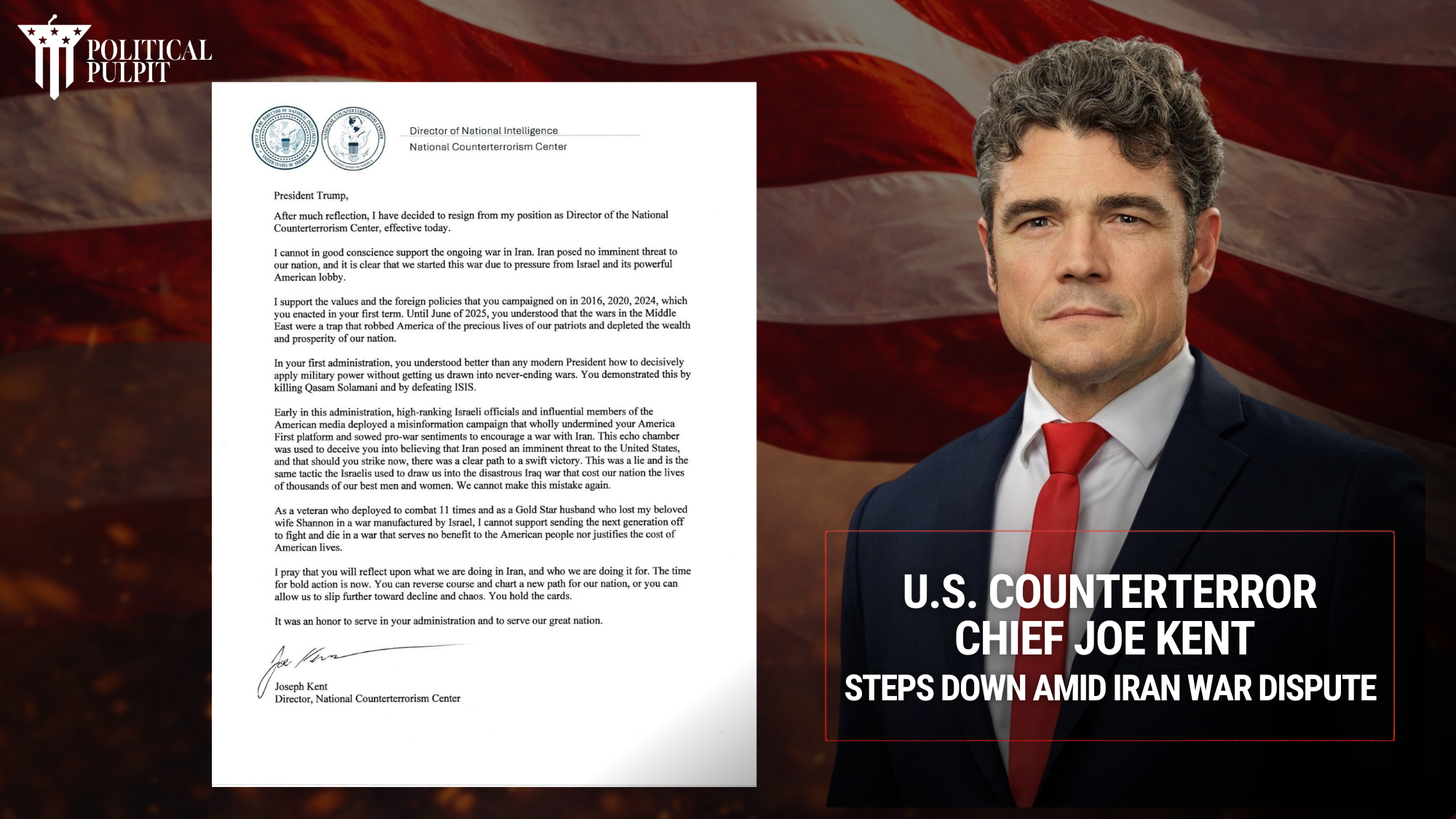
Washington was shaken this week by reports that a senior U.S. counterterrorism official has stepped down amid growing internal disagreement over America’s escalating conflict with Iran.
According to emerging reports circulating across political and media circles, Joe Kent—serving in a top national security role—has resigned, citing concerns over the direction and justification of the current war effort.
While official confirmation and full details remain limited, the reported reasoning behind the resignation is already fueling intense debate.
At the center of the controversy is a claim that the war with Iran may not have been driven by an immediate threat to the United States—but rather by broader geopolitical pressure and strategic alliances.
A Fracture Inside the National Security Apparatus?
If confirmed, this resignation could signal something deeper than a personnel change.
It could point to serious internal divisions within America’s national security leadership.
Historically, disagreements over military engagement have often happened behind closed doors. But when those disagreements surface publicly—especially during an active conflict—it raises critical questions:
- Was the war unavoidable?
- Were intelligence assessments unified?
- Are policymakers aligned on long-term strategy?
Moments like this suggest that not everyone inside the system sees the situation the same way.
The Iran War Continues to Escalate
This development comes as tensions between the United States and Iran continue to intensify across multiple fronts.
Military operations in the region have expanded, with ongoing strikes, retaliatory attacks, and growing instability surrounding critical areas like the Strait of Hormuz—a vital artery for global oil supply.
At the same time, the economic impact is beginning to hit Americans at home, with rising fuel costs and increasing concern about long-term financial strain.
Against this backdrop, any sign of disagreement within leadership circles carries even greater weight.
The Bigger Conversation: Who Decides War?
The reported resignation also brings a deeper issue into focus:
Who ultimately shapes America’s decisions to go to war?
In a complex global landscape, decisions are influenced by intelligence agencies, military leadership, elected officials, and international alliances.
But when questions arise about why a war begins, the American people deserve clarity.
Transparency matters.
Accountability matters.
And in times of conflict, truth matters more than ever.
A Biblical Perspective on Leadership and War
For believers, moments like this should not lead to confusion—but to discernment and prayer.
Scripture reminds us:
“When the righteous are in authority, the people rejoice: but when the wicked beareth rule, the people mourn.” — Proverbs 29:2
This is not about political sides.
It’s about righteous leadership, truth, and wisdom in moments that impact lives across the world.
What the Church Must Do
In a time of uncertainty, the role of the church is clear:
Pray for truth. Pray for wisdom. Pray for peace.
Pray for:
- Leaders making decisions in times of war
- Protection for American troops and innocent civilians
- Clarity and honesty in government communication
- Peace in the Middle East
And above all, pray that truth prevails over confusion and division.
Final Word
If these reports are confirmed, this resignation could become a defining moment in the narrative surrounding the Iran conflict.
Because when leaders step down in protest, it often signals that something deeper is unfolding beneath the surface.
And in times like these, Americans—and especially believers—must stay informed, stay discerning, and stay grounded in faith.
Subscribe to the Political Pulpit newsletter for more faith-centered reporting, and join the fight for truth, justice, and global religious freedom.
Watch our broadcasts at Watch.OSN.tv — use promo code JOSH
Support our mission at www.politicalpulpit.com/partner
The time to speak is now.
The time to act is now.
The time to pray—for truth, leadership, and peace in uncertain times—is now.