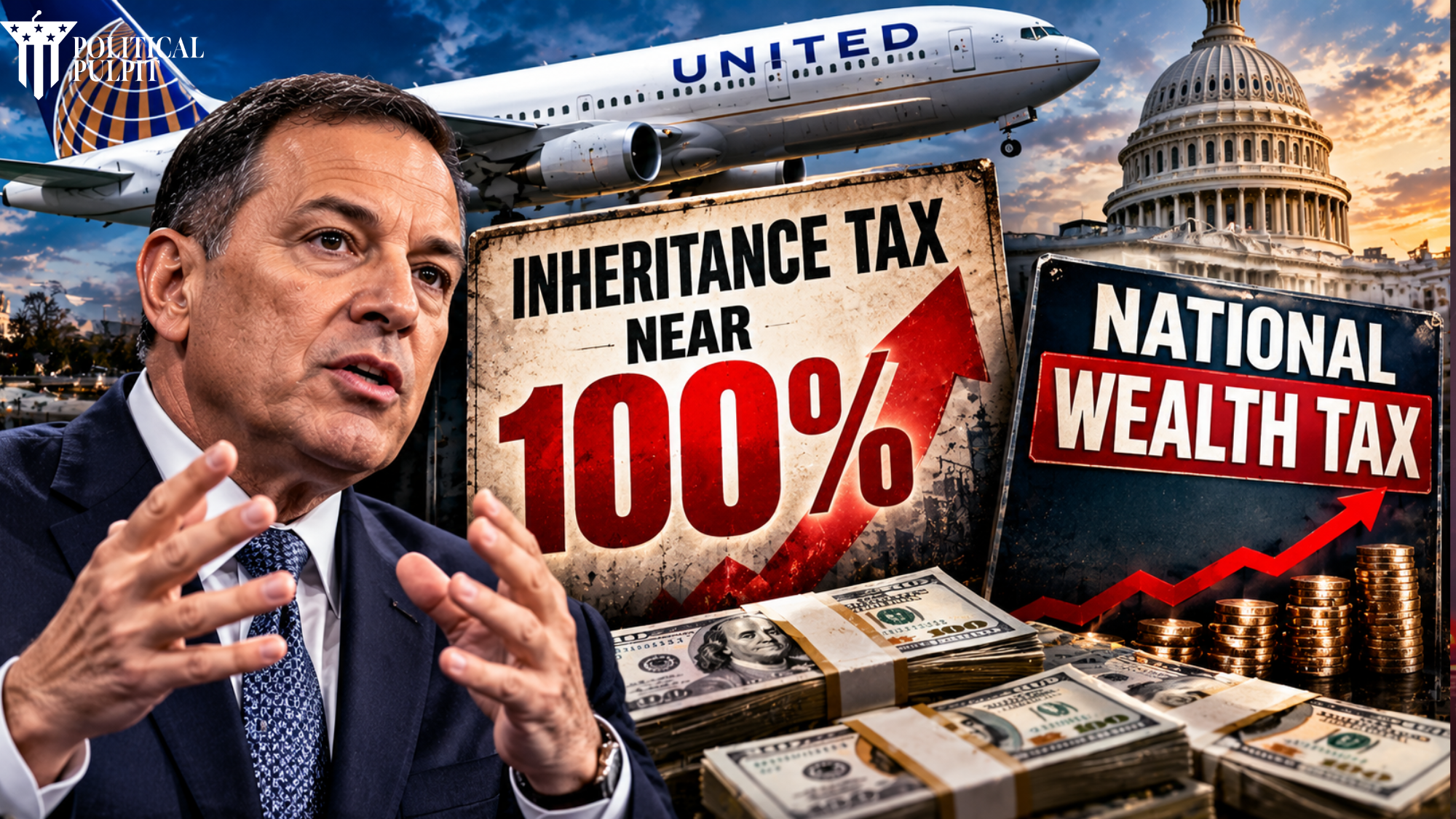
WASHINGTON, D.C. — United Airlines CEO Scott Kirby is calling for a national wealth tax and inheritance taxes approaching 100% above an unspecified level, igniting debate over wealth inequality and the future of American tax policy.
Kirby made the remarks during an interview with The New York Times published October 18, 2026, while discussing declining public trust in corporate executives.
He described growing wealth inequality as a danger to American society and argued that the country needs to address it.
The comments attracted attention because they came from the chief executive of one of the nation’s largest airlines.
What Scott Kirby Actually Proposed
Kirby said he supports a national wealth tax rather than separate state-level measures.
He argued that wealthy individuals could relocate to avoid taxes imposed by individual states.
Additionally, he suggested inheritance taxes approaching 100% at some level and said he would personally pay them.
However, Kirby did not specify how much wealth would trigger the proposed tax.
He also did not identify an exact inheritance tax rate, outline exemptions, or present legislation.
Therefore, his remarks should be understood as a policy position rather than a fully developed tax proposal.
Importantly, Kirby did not advocate a 100% tax on every inheritance received by American families.
How Current Estate Taxes Work
The United States already imposes a federal estate tax on certain large estates.
In 2026, the basic federal estate tax exclusion is $15 million per individual.
The top marginal federal estate tax rate is 40%.
Consequently, most estates fall below the federal filing threshold, and qualifying deductions may further reduce taxable amounts.
An estate tax generally applies to the estate before assets pass to beneficiaries.
A national wealth tax would operate differently, potentially taxing the value of certain assets while their owners are still living.
Kirby’s ideas would require significant changes to federal tax law.
United Airlines CEO Compensation Draws Attention
The discussion also comes as executive compensation remains part of the national conversation about economic inequality.
According to United Airlines’ 2026 proxy statement, Kirby received approximately $32.3 million in total compensation for 2025.
The company reported median annual employee compensation of $96,670.
That represented an estimated CEO-to-median-employee compensation ratio of 334 to 1.
These figures provide context for Kirby’s comments, although they do not establish whether his proposed taxes would achieve their intended results.
Debate Over Wealth and Economic Opportunity
Supporters of higher taxes on substantial fortunes argue that such policies could address wealth concentration and raise federal revenue.
Opponents question their effects on investment, business ownership, inheritance planning, and economic growth.
The actual consequences would depend on the specific rates, exemptions, enforcement rules, and other provisions adopted.
Kirby also defended United’s practice of charging passengers more for certain preferred seats during the interview.
Despite his concerns about inequality, he expressed optimism about America’s economic future.
A Biblical Perspective
Proverbs 13:22 KJV declares:
“A good man leaveth an inheritance to his children’s children: and the wealth of the sinner is laid up for the just.”
Scripture recognizes the importance of providing for future generations.
The Bible also warns against greed and calls believers to treat others with justice and compassion.
These principles invite careful consideration of both responsible stewardship and the needs of society.
Where We Stand
Here at Political Pulpit, we believe Americans deserve accurate information about proposals that could affect their financial future.
Kirby’s comments raise significant questions about taxation, wealth, and opportunity.
However, a corporate executive’s personal views are not federal policy, and his remarks do not mean new inheritance taxes have been enacted.
We will continue examining economic proposals through the lens of factual reporting, biblical discernment, and responsible stewardship.
Subscribe to the Political Pulpit newsletter for more faith centered reporting and analysis.
Watch our broadcasts at Watch.OSN.tv and use promo code JOSH.
Support our mission at www.politicalpulpit.com/partner.
The time to speak is now, the time to act is now. The time to pray for financial wisdom, responsible stewardship, and America’s economic future is now.