

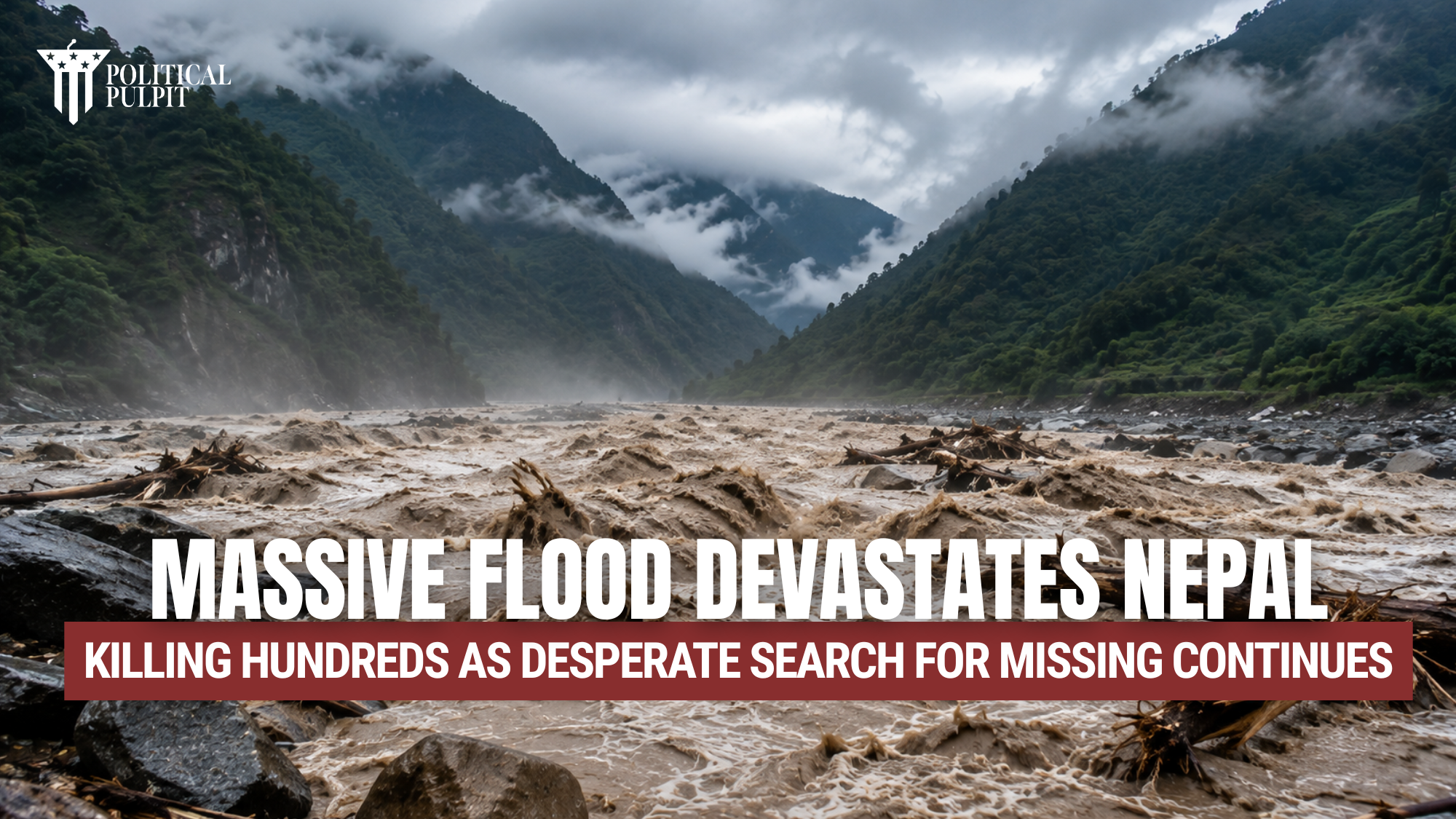
Nepal is facing a devastating humanitarian disaster after a massive Himalayan flood swept through communities, destroyed critical infrastructure, and left hundreds dead as rescue teams desperately search for the missing.
The disaster struck August 26 after a massive collapse of ice, rock, and earth near the Nepal-Tibet border sent a destructive surge into the river system below.
By Thursday evening, Nepalese authorities reported that 359 bodies had been recovered. Hundreds more remained missing, including local residents, security personnel, tourists, and foreign nationals.
The numbers have changed dramatically throughout the day as rescue teams reach previously inaccessible areas, meaning the final death toll could rise substantially.
Entire Communities Hit by the Flood
The scale of destruction stretches far beyond the initial impact zone.
Floodwaters and debris surged through the Bhote Koshi and Trishuli river systems, carrying destruction downstream through multiple districts.
Homes have been destroyed. Roads have disappeared beneath mud and debris. Bridges have collapsed, and hydropower facilities and other critical infrastructure suffered extensive damage.
Nepal’s disaster-management agencies, police, military, local authorities, and medical services have mobilized for search-and-rescue operations.
Helicopters are evacuating survivors and delivering emergency supplies where damaged roads have cut communities off from outside assistance.
Among the missing are hundreds of international tourists from dozens of countries. Americans, Indians, Britons, Canadians, Australians, Malaysians, Ukrainians, and travelers from numerous other nations were in the region when disaster struck.
What Caused the Disaster?
Early reports indicate that the catastrophe began high in the Himalayas.
Satellite imagery examined after the disaster revealed that rock and ice collapsed near the Langtang Lirung area close to the Nepal-Tibet border.
The enormous mass poured into narrow valleys and waterways, creating a sudden torrent of water, mud, ice, boulders, and debris.
The flood rose with terrifying speed, leaving some communities with little opportunity to escape.
Scientists are now studying the event while authorities continue monitoring rivers and newly unstable areas for the possibility of additional flooding.
For thousands of families, however, the immediate priority remains finding their loved ones.
A Biblical Perspective
Natural disasters remind us how quickly life can change and how desperately humanity needs God.
“God is our refuge and strength, a very present help in trouble.” (Psalm 46:1 KJV)
Scripture also commands believers to respond to suffering with compassion.
“Bear ye one another’s burdens, and so fulfil the law of Christ.” (Galatians 6:2 KJV)
When disaster strikes another nation, Christians should not simply watch from a distance. We should pray, give, serve, and look for opportunities to bring both practical assistance and the hope of Jesus Christ.
Where We Stand
Nepal needs prayer right now.
Hundreds of families are grieving. Others are waiting desperately for news about missing husbands, wives, children, parents, friends, and loved ones.
Political Pulpit calls on Christians to pray for survivors, rescue workers, medical teams, missionaries, churches, and every family affected by this catastrophe.
Pray that those still trapped or missing will be found alive. Pray for protection over rescue workers entering dangerous areas. Pray that humanitarian assistance reaches devastated communities quickly.
And pray that in the middle of unimaginable loss, the Gospel of Jesus Christ will bring hope to hurting people.
Subscribe to the Political Pulpit newsletter for more faith-centered reporting and analysis.
Watch our broadcasts at Watch.OSN.tv and use promo code JOSH.
Support our mission at www.politicalpulpit.com/partner.
The time to speak is now, the time to act is now. The time to pray for Nepal, the missing, the grieving, and those desperately searching for survivors is now.