

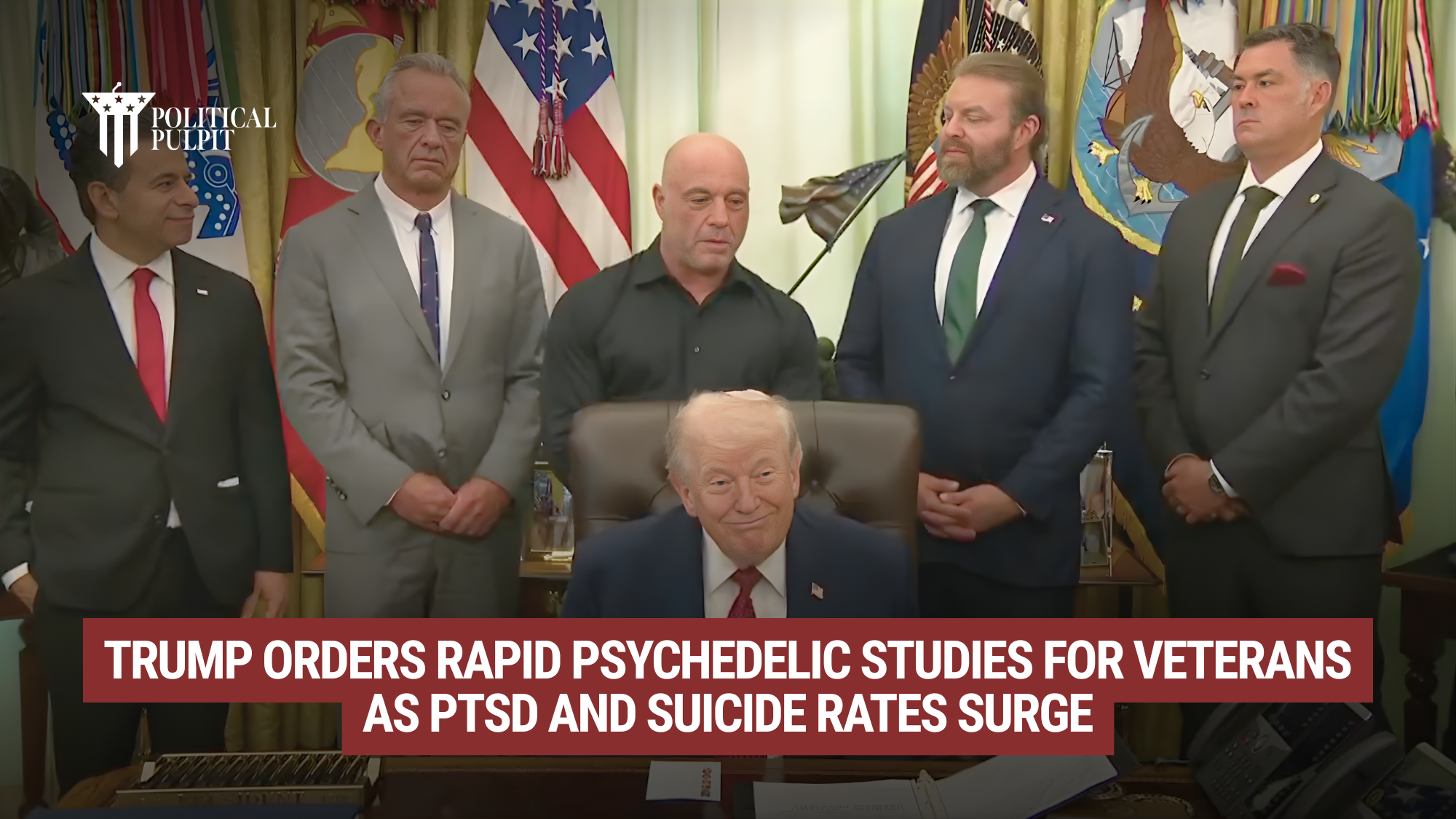
A major shift in mental health policy is gaining national attention after President Donald Trump directed federal agencies to accelerate research into psychedelic-assisted therapies for conditions like PTSD, depression, addiction, and suicide risk.
The move, announced April 18, 2026, focuses heavily on helping U.S. veterans, many of whom continue to face severe mental health challenges after returning home. The directive calls for faster study timelines and streamlined review processes, particularly through the FDA, without formally rescheduling the drugs at this stage.
This is not a fringe conversation anymore. It is moving into the center of national policy.
A Crisis Driving Urgency
The push comes amid growing concern over the current mental health system.
Speakers and advocates have pointed to rising antidepressant use across the country, including claims that a significant percentage of American women remain on long-term prescriptions. At the same time, questions continue to grow about effectiveness, side effects, and dependency.
For veterans, the stakes are even higher.
Rates of PTSD, depression, and suicide remain deeply concerning. Many have reported that traditional treatments have not delivered lasting results.
That is why this new direction is gaining traction.
Early Research and Bold Claims
Supporters of psychedelic-assisted therapy point to early clinical studies suggesting rapid and significant improvement in symptoms. Some reports have claimed reductions in PTSD and depression symptoms by as much as 80 to 90 percent within weeks.
While these results are still being studied and debated, they are strong enough to draw attention at the highest levels of government.
President Trump’s reported reaction has also resonated with many Americans. In widely shared clips, he asked a direct question.
“Do they work?” That question is now driving action.
The Role of Federal Agencies
Under the new directive, federal health agencies are being instructed to accelerate research timelines and remove unnecessary barriers that slow down clinical trials.
The FDA is expected to play a central role, with faster review pathways for promising therapies. However, officials have not announced any immediate changes to the legal classification of psychedelic substances.
Health Secretary Robert F. Kennedy Jr., who has previously expressed openness to alternative therapies, is expected to be a key figure in shaping how these policies move forward.
This marks a continuation of growing bipartisan interest in exploring new solutions to the mental health crisis.
Why This Moment Matters
This is a turning point in how America approaches mental health.
For decades, treatment has relied heavily on pharmaceuticals that often require long-term use. Now, the conversation is shifting toward therapies that aim to produce faster and more lasting transformation.
For veterans, this could be life-changing.
Many have described this approach as a potential lifeline after years of struggling without relief.
At the same time, critics are urging caution. Questions remain about safety, regulation, long-term effects, and ethical use.
The debate is far from over.
Spiritual Perspective
Scripture reminds believers that healing is both physical and spiritual.
“He heals the brokenhearted and binds up their wounds.” Psalm 147:3
“Come to Me, all you who labor and are heavy laden, and I will give you rest.” Matthew 11:28
While medicine plays a role, true restoration ultimately comes from God.
In a time of searching for solutions, wisdom and discernment are essential.
What the Church Must Do
The Church must engage this moment with clarity and compassion.
• Pray for veterans and those battling mental health challenges
• Support efforts that seek real healing while maintaining discernment
• Encourage holistic care that includes spiritual, emotional, and physical support
• Speak truth about lasting hope found in Christ
• Walk alongside those who are suffering with compassion and accountability
Final Word
President Trump’s directive to accelerate psychedelic research marks a significant shift in national policy and cultural conversation.
For some, it represents hope. For others, it raises serious questions. But one reality is clear.
America is searching for answers to a growing mental health crisis. The question now is not whether change is coming. It is how that change will unfold.
Subscribe to the Political Pulpit newsletter for more faith-centered reporting, and join the fight for truth, justice, and global religious freedom.
Watch our broadcasts at Watch.OSN.tv – use promo code JOSH
Support our mission at www.politicalpulpit.com/partner
The time to speak is now, the time to act is now.
The time to pray for peace, wisdom, and stability is now.