


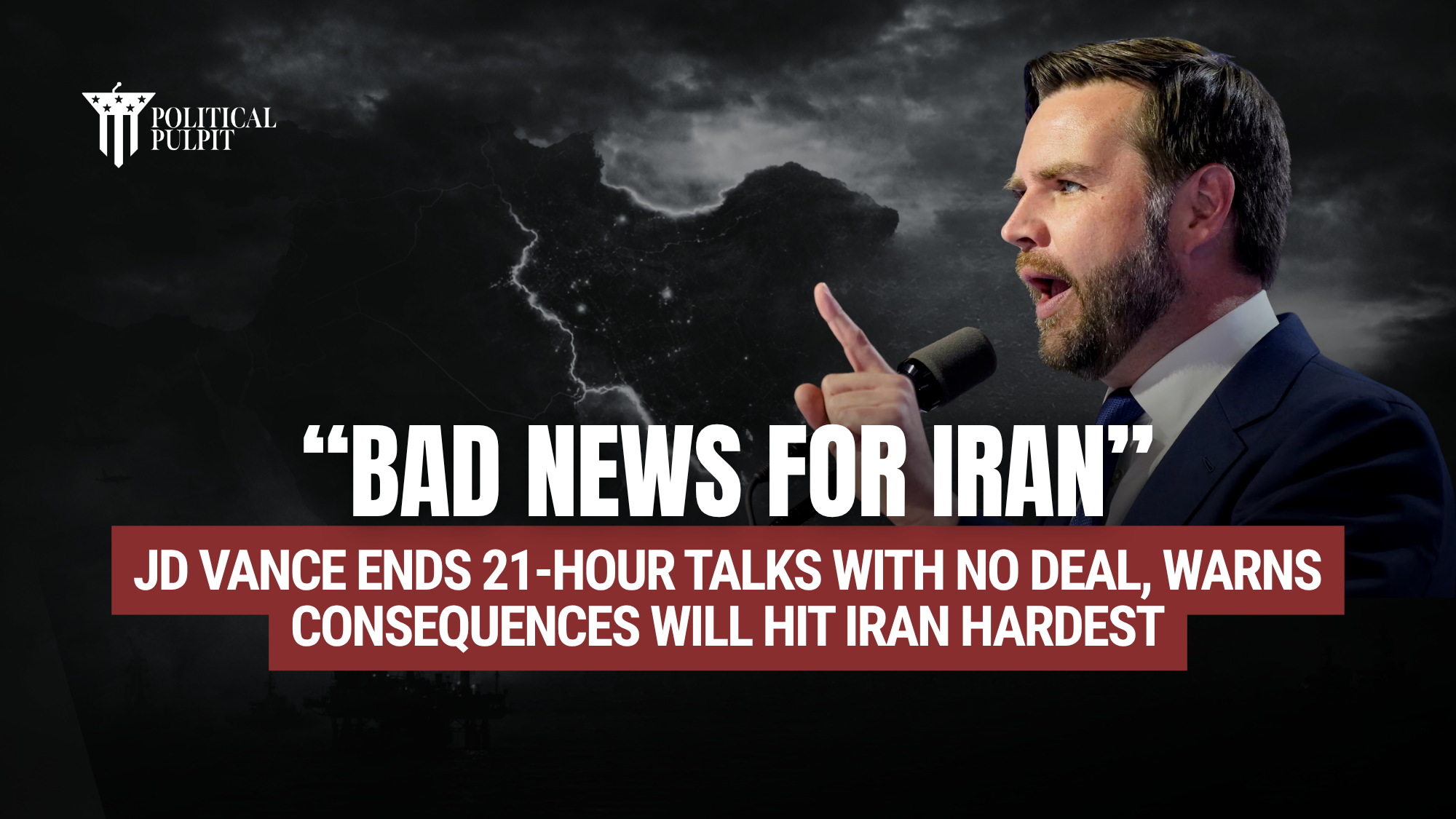
A high-stakes round of negotiations between the United States and Iran has ended without a deal after more than 21 hours of intense discussions, according to Vice President JD Vance.
Speaking after the marathon talks, Vance made it clear that while progress was made, the outcome ultimately fell short of an agreement.
“We’ve been at it for 21 hours. We’ve had substantive discussions… but the bad news is, we have not reached an agreement.”
“That’s bad news for Iran much more than it is bad news for the United States of America.” The message was direct. Talks happened. But they failed.
21 Hours Without a Deal
The negotiations took place in Islamabad, Pakistan, where U.S. and Iranian officials engaged in extended, high-level discussions aimed at easing tensions and securing a broader agreement.
Despite what Vance described as “substantive discussions,” the two sides could not bridge key differences.
Because of this, the U.S. delegation is now returning home without a deal.
Why Talks Broke Down
One of the central issues remains Iran’s nuclear program.
U.S. officials pushed for a clear commitment that Iran would not pursue nuclear weapons. However, Iran did not agree to those terms, leaving negotiations at a standstill.
At the same time, disputes over sanctions, regional influence, and control of critical trade routes added further complexity.
Because of this, the gap proved too wide to close.
A Message of Pressure
Vance’s statement was not neutral.
It was strategic. By emphasizing that the outcome is worse for Iran, the message signals that the United States believes it holds the stronger position moving forward.
Because of this, pressure now shifts to Iran. Accept the terms. Or face what comes next.
Global Stakes Rising
Iran plays a central role in global stability, particularly in the Middle East.
Issues surrounding energy routes, including the Strait of Hormuz, and broader regional conflicts remain tied to the outcome of these negotiations.
Because of this, the failure to reach a deal has immediate global implications.
Markets react. Allies respond. Tensions rise.
What Happens Next
The situation remains fluid. Talks could resume. Positions could harden. Or escalation could follow. Because of this, the next phase will be critical.
The world is watching closely.
A Spiritual Perspective
Moments like this remind us how quickly global tensions can shift. Scripture speaks of nations in conflict, yet it also calls for wisdom, peace, and prayer.
Even in uncertainty, the call to faith remains steady.
What the Church Must Do
As tensions rise, the response is clear.
We are called to:
Pray for peace in the Middle East
Pray for wisdom among leaders
Pray for stability in uncertain times
Remain grounded in faith
Because even when the world feels unstable, hope remains.
Final Word
The talks are over. No deal has been reached. And the message from JD Vance is clear.
This outcome may not fall equally.
Subscribe to the Political Pulpit newsletter for more faith-centered reporting, and join the fight for truth, justice, and global religious freedom.
Watch our broadcasts at Watch.OSN.tv use promo code JOSH
Support our mission at www.politicalpulpit.com/partner
The time to speak is now, the time to act is now.
The time to pray for peace and wisdom is now.
Leave a Reply Cancel reply